 Oct 30, 2026 10:00 AM
Don’t Chase Poinsettia Height
Next month (November) can really be a make-or-break time for your crop.
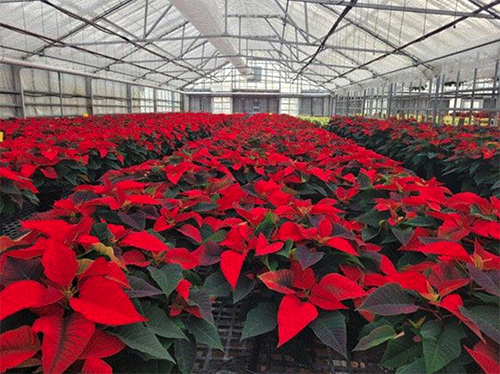
PROBLEM: November is on the horizon, which means that across the North American continent, poinsettias—no matter their response timing—are putting their energy toward bract development vs. height growth. Unless your operation is located on the most southern latitudes, natural growth will tail off to about one-half to three-quarters of an inch per week (or less).
JAMES’ TIP: Last week's tips from Josh Henry focused on maintaining good-quality bracts through the last few weeks of finish prior to ship. This week's tip is to NOT go chasing height specs in November. Even with some chemical GA tricks, making up 2 to 3 inches this late is unrealistic. Instead, focus on accepting the crop as it currently is and spend your time finding alternative buyers (if needed) for the portion of the crop coming up short of spec.
Don't shoot from the hip and apply chemicals that you are unsure of their response. November is when poinsettia plant quality is maintained or lost, not made up. And every chemical application, whether applied overhead or as a drench) comes with risk.
This does NOT mean never try something new. Minimize your risk by testing new chemical applications on a small group of poinsettias prior to crop-wide application. If you desire to apply a chemical across the crop, make sure every individual variety you plan to treat is represented in your test group. Poinsettias, even from the same breeding company, are individuals; an application that is safe on one variety does not ensure safety on another variety. These response differences can be minor during growing, but with bract color the response difference can range from minor spotting to total bract destruction. Still, there is value in experimenting to see if you have a tool for next year.
Temperature strategies are the best for throttling bract color development and growth. Use morning dips and negative DIF to control height on varieties that have a history of late-season stretch. Maybe apply a paclobutrazol micro-drench if you are nearing the top of your height specs. Bring up your night temperatures for quicker color development. Positive DIF can help on sunny days to eke out that additional quarter inch of height, but on overcast days the artificial warm day can produce soft growth prone to handling damage during shipping.